Track tyre pressure: check after every session
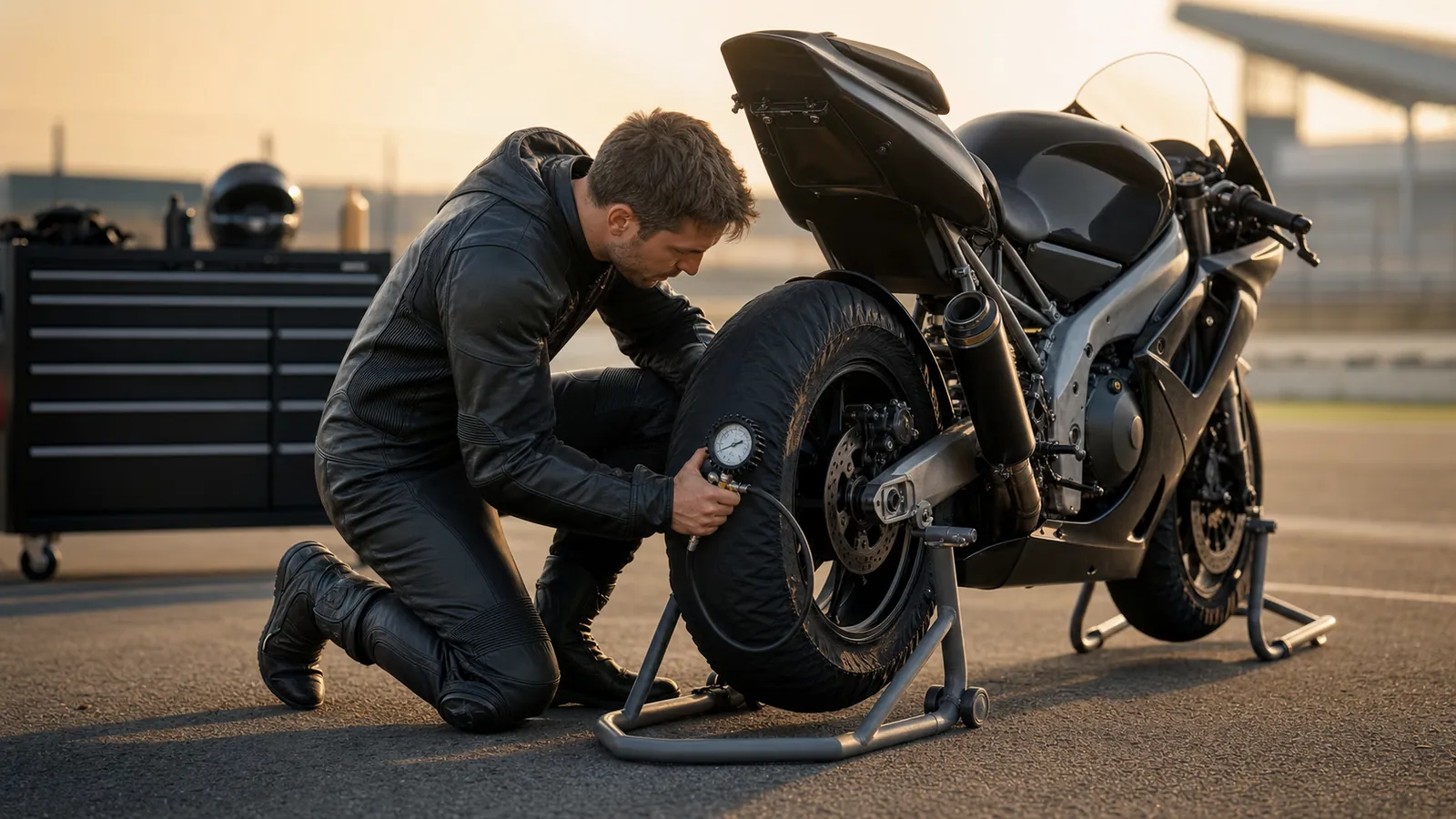
Setting your pressures in the morning and leaving them alone all day means missing what is actually happening on track. Between the first session and the afternoon, the air temperature may have risen, the asphalt warmed up and your pace improved. Your tyres may no longer be working in the same conditions.
Make a habit of checking your pressures as you come off track, after every session. This is the most useful reading for monitoring their pressure in riding conditions. Setting them cold and checking them on tyre warmers remain necessary depending on your tyre, but neither replaces this check.
Back from the track: pressure gauge before a break
Get your pressure gauge ready before you go out so it is within reach when you return. Once the bike is safely parked in your space, take the front and rear readings straight away, without waiting ten minutes to chat about the session. The tyre starts cooling as soon as you stop riding: a late reading no longer reflects the same situation. 2
Do this even if your tyre's data sheet does not give a target pressure for coming off track. The absence of a published figure does not make the reading useless: record it to track changes. However, do not invent a target or borrow one from another tyre. Have a tyre technician confirm the appropriate range before changing your setup on that basis.
If your tyre has a hot target pressure or range, compare your reading with that reference, under the stated conditions. A figure after tyre warmers is not automatically a target after riding, and a minimum is not an ideal pressure to aim for.
Why check after every session?
Pressure changes with the temperature of the air inside the tyre. Outside air and track temperatures, as well as your riding, affect its operating conditions. 2
A hotter afternoon may therefore raise the pressure compared with the morning. The same can happen if you pick up the pace: riding, for example, five seconds a lap faster can put more load into your tyres and heat them up. It is not automatic, and a lap time alone cannot tell you to make a fixed adjustment in bar.
The opposite can also happen in a gentler session or when conditions change. The morning reading does not validate the sessions that follow. Check when you return, even if you have not changed your starting setup.
Record pressures alongside the session context: weather, pace, any interruption and how the bike felt. You can then compare readings taken at the same stage, rather than a pressure on tyre warmers with one taken after a long break.
Your neighbour's pressure is not your tyre's pressure
Some tyres are designed to work at lower track pressures than others. The rear Dunlop GP Racer D212 is one example: its recommendation must not be copied onto another model, even from the same brand. Nor does it mean its front tyre should be set that low. 2
The same size, a similar bike or a comparable pace does not make two setups interchangeable. Start with the recommendation for the exact tyre, the correct wheel and the right point in the measurement routine. A low pressure specified for a suitable tyre is not a universal trick for finding more grip.
You can find the available references in our motorcycle track tyre pressure tool. It distinguishes front from rear, as well as readings taken cold, after tyre warmers and after riding. If your tyre is missing, ask for confirmation rather than choosing the closest-looking model.
Cold and on tyre warmers: preparing to go out
Cold pressure is measured before riding or heating, when the tyre and wheel rim are at ambient temperature. A tyre you have just ridden to the circuit on is not cold. 1
With tyre warmers, follow the specified temperature and heating time for your tyre, then use the corresponding pressure setting. Warmers prepare the tyre before you go out; they do not guarantee it will stay at that pressure throughout the session. You still need to check as you come off track. 2
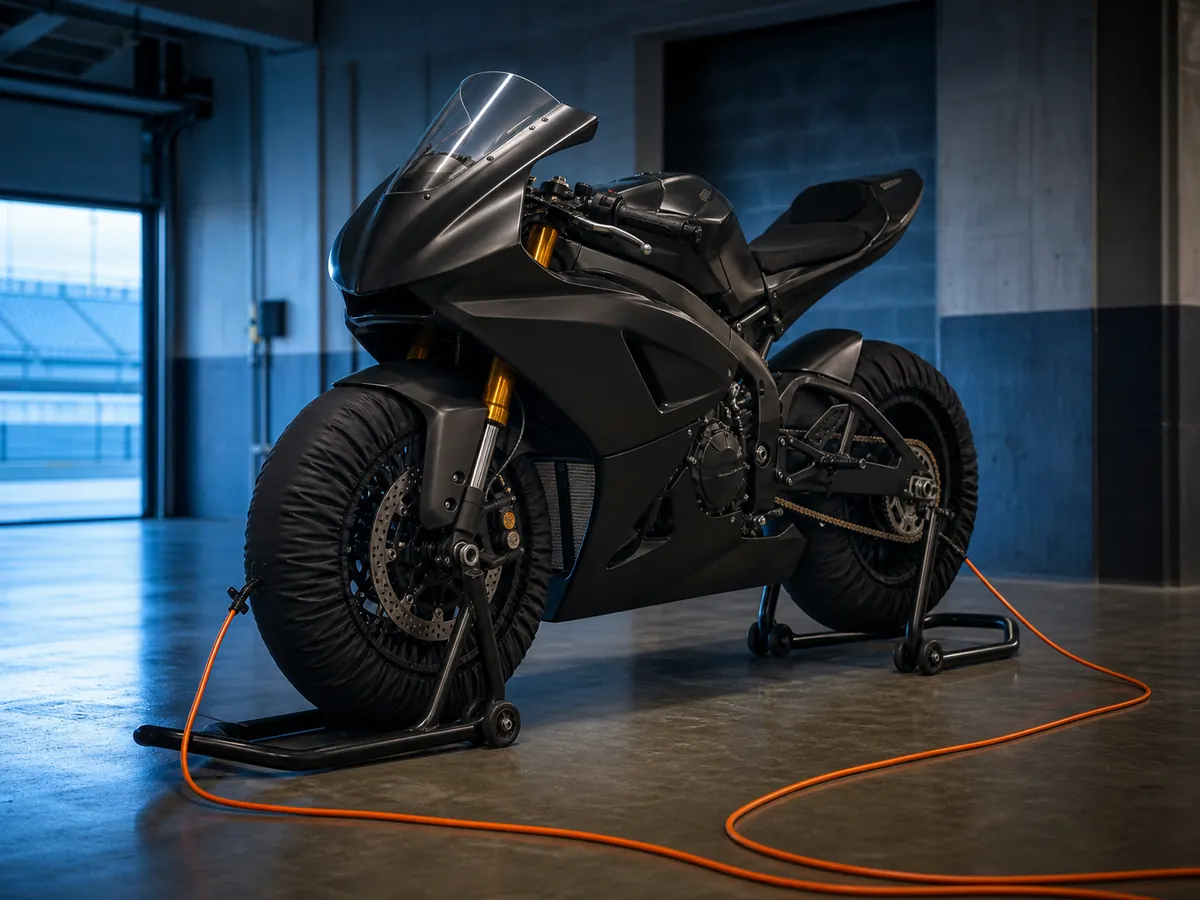
In every case, start with an appropriate setting and respect the stated minimums. Checking on your return does not justify going out with a pressure chosen at random. For a wet tyre, use its own recommendation, not an improvised adjustment to a slick's setting.
Check the tyre's condition too, without jumping to conclusions
Back in the paddock, take a look at the tread: uneven wear, heavily marked areas, torn rubber or deterioration that grows worse as the sessions go on.
A heavily marked tyre can indicate pressure that is too low or too high. But appearance alone cannot settle the question: suspension settings, the circuit's asphalt, the chosen compound (our compound guide helps place it by brand and use), its operating temperature and your riding can all play a part. Several factors can combine. 3
Do not add or release air just because the surface looks like a photo you saw online. Start by measuring the pressure, compare it with the reference for your tyre and consider the context. If the wear looks abnormal, show the tyre to a technician along with your readings and suspension settings.
If there is deep tearing, a cut, exposed carcass or an unexplained loss of pressure, do not go back out until the tyre has been checked.
A routine to keep up all day
- Before going out, check the setting for the tyre's condition: cold or after tyre warmers.
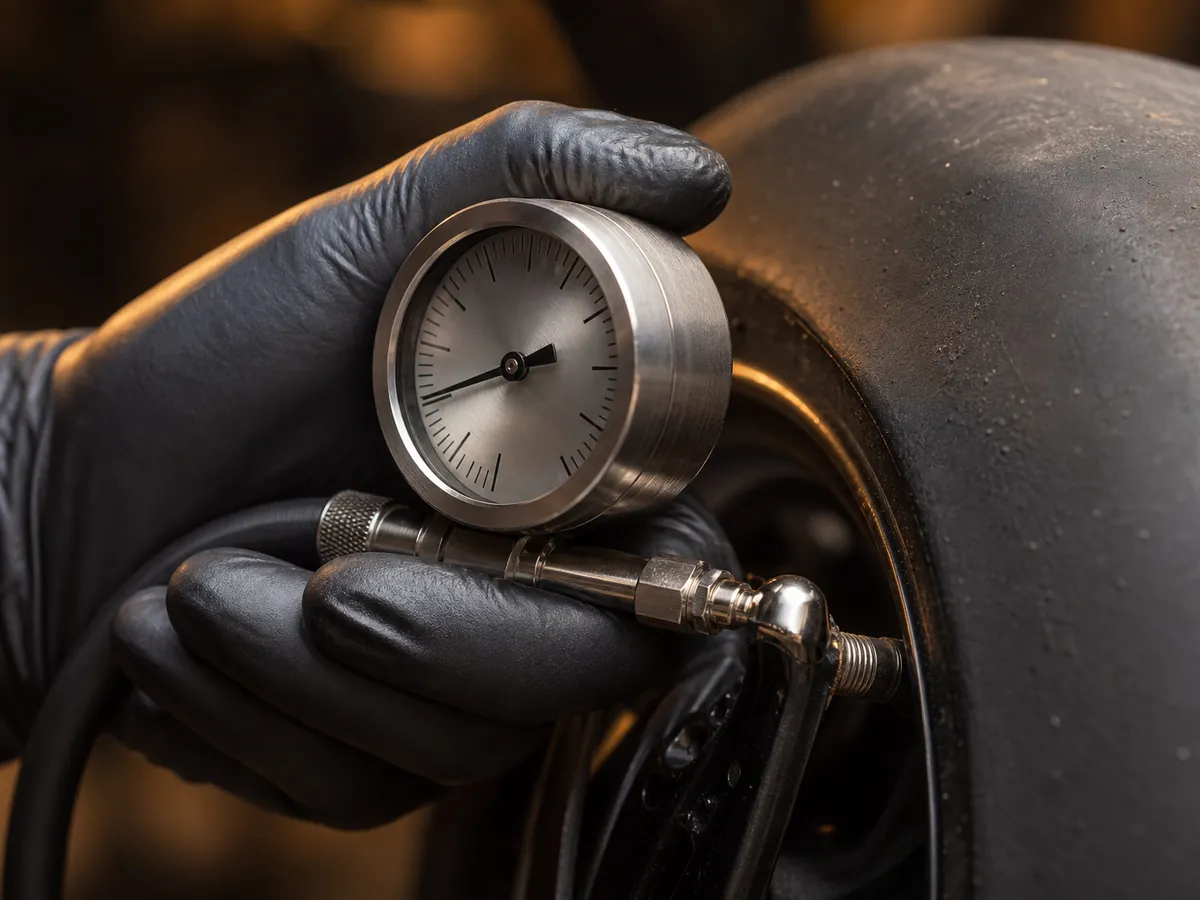
- Every time you return, measure the front and rear straight away, at the same point in your routine. Use the same gauge, and have its accuracy checked regularly. 2
- Look at the tyres and record pressures, conditions and how the bike felt. A photo can help track wear over time, though it cannot explain the cause on its own.
- Before the next session, if a reading is outside the appropriate range or the tyre's condition worries you, have it checked rather than going back out with a setting you do not understand.
The track pressure calculator helps you find the figures; the compound guide adds context to your tyre choice. You can keep your readings in your notes or in your My circuits area.
If you ride home on road-approved tyres, restore the specified road pressures under the prescribed measurement conditions. A track setting is not a road setting. 1
Sources
1 https://www.michelin.co.uk/motorbike/advice-motorbike/tyre-care/motorcycle-tyre-pressure-guide — Michelin — Motorcycle tyre pressure guide 2 https://www.dunlop-moto.com/en_gb/safety-and-technology/tire-pressure-information.html — Dunlop — Track tyre pressure information 3 https://lifeatlean.com/motorcycle-tyre-wear-guide — Life at Lean — Race Track Motorcycle Tyre Wear Guide